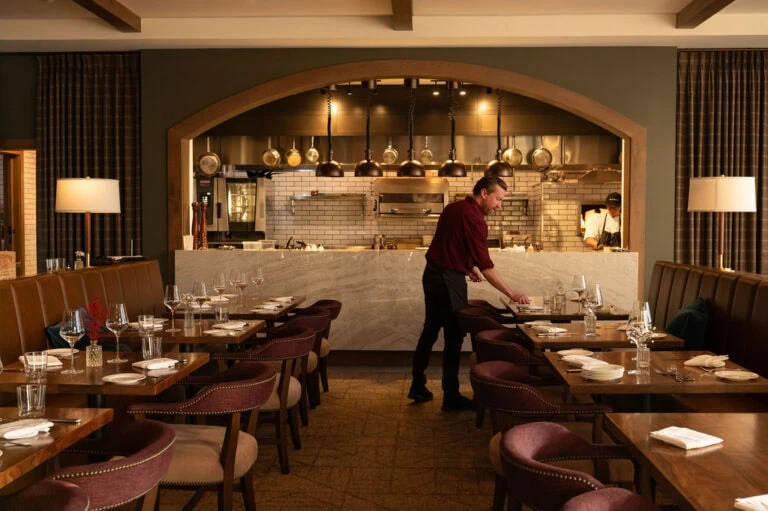
On Wednesdays in the summer, the Wild Sage Restaurant and Bar hums with energy long before the first guest steps through the doors. Looking across the dining area into the kitchen, you can see crates brimming with just-picked squash, fragrant garlic scapes, whole fish, and dozens of other ingredients. For Executive Chef Hugo Goodwin, this weekly modern-day cornucopia brings both a challenge and rush of inspiration.
“Fresh Inspiration” at a Seasonal Menu Restaurant
After a long wait in a region with a painfully brief growing season, local growers like Canewater Farm in Victor, Idaho, and Wasatch Organics in Utah are finally hitting their stride. “In winter, we can prepare a lot more ahead of time,” says Hugo, “because the season’s so much longer and you have fewer ingredients.”
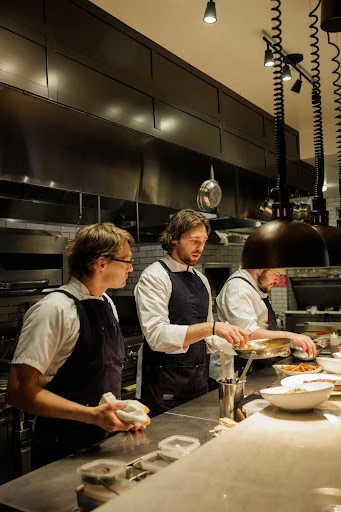
The summer, however, is a different story. New ingredients roll in with very little time to prepare. “We’ll get a list of what’s coming three or four days in advance, and then they deliver it, and we’re off,” says Hugo. “There’s always an idea floating around. But the dish doesn’t really happen until the ingredients show up. That’s the fun part.”
The flood of fresh product means the menu is in constant motion, and so are the chefs. “Our menu file is constantly being edited. We’re always wondering if a dish is going to make the deadline for tonight’s service, or if we should put it on tomorrow’s.” But it can be hard to keep the excitement in check, and someone is usually running off minutes before dinner to print a final addition. “It’s hard for the rooms department to keep on top of us,” says Hugo, with a hint of sheepishness. “But it’s super fun. I mean, we wouldn’t do it if we didn’t love it.”
Hugo’s approach to cuisine at The Wild Sage is equal parts intuition and experience. “The team and I are familiar enough with the season to have an idea of what we’re getting. But you’re always kind of waiting for the right item to be available in order to do the thing you’ve been thinking about doing,” he says. The produce and proteins serve as prompts, and Hugo sees a creative opportunity in everything that comes through the kitchen doors.
Sometimes that creativity starts with a single ingredient. For example, Wild Sage sources dairy from Shumway Farms in Star Valley and uses it to make ricotta in-house. Instead of discarding the whey—a byproduct of the ricotta—Hugo mixes it with charred garlic scapes to create a savory sauce served with wild Chinook salmon. The ricotta goes into filled corn caramelle pasta, while the whey becomes something new. Nothing goes to waste.
Community Mindset and Creativity
The same mindset drives their whole-animal program. Working with local farms like Late Bloomer Ranch in Driggs and OK Ranch in Tetonia means getting meat on the ranchers’ schedules, not a supplier’s. It also means taking the entire animal—shoulders, ribs, off-cuts and all—and finding ways to make each part sing. “It’s not infinite,” Hugo says. “So how do you run a dish with what’s available? Putting filet on the menu is easy, but how do we do something with a flat iron? Or a flank? How do we make something equally accessible, equally delicious?”
One answer: pork pappardelle, a rustic pasta dish built around braised pork shoulder, paired with a tomato sauce that is almost aggressively simple. “It’s just tomato, garlic, and basil,” Hugo says. “We’re letting the ingredients shine. And that’s great, because they’re great ingredients. We will never serve a tomato unless they’re in season, just philosophically.” Even in the high-energy summer season, that sense of restraint, of reverence for the integrity of the ingredients, is a throughline in Hugo’s cooking.
This approach challenges the chefs, elevates the Wild Sage’s cuisine, and reduces waste by helping local suppliers empty their freezers. But more than that, it helps build a community. Every ingredient bears the fingerprints of the people who coaxed it into being. The kitchen then becomes a place for honoring that story. “The person making the delivery from Canewater is the guy who runs the farm. The guy who dropped off the bison meat from OK Ranch is the guy that started that farm. We’re in touch with the people that began these projects, and the coolest part for me is just being part of the conversation with them,” says Hugo. “Their success is our success.”
View A Few of Our Favorite Locally-Inspired Recipes
The Wild Sage’s Potato Garleek Soup Recipe
How to Create Authentic Focaccia like Wild Sage